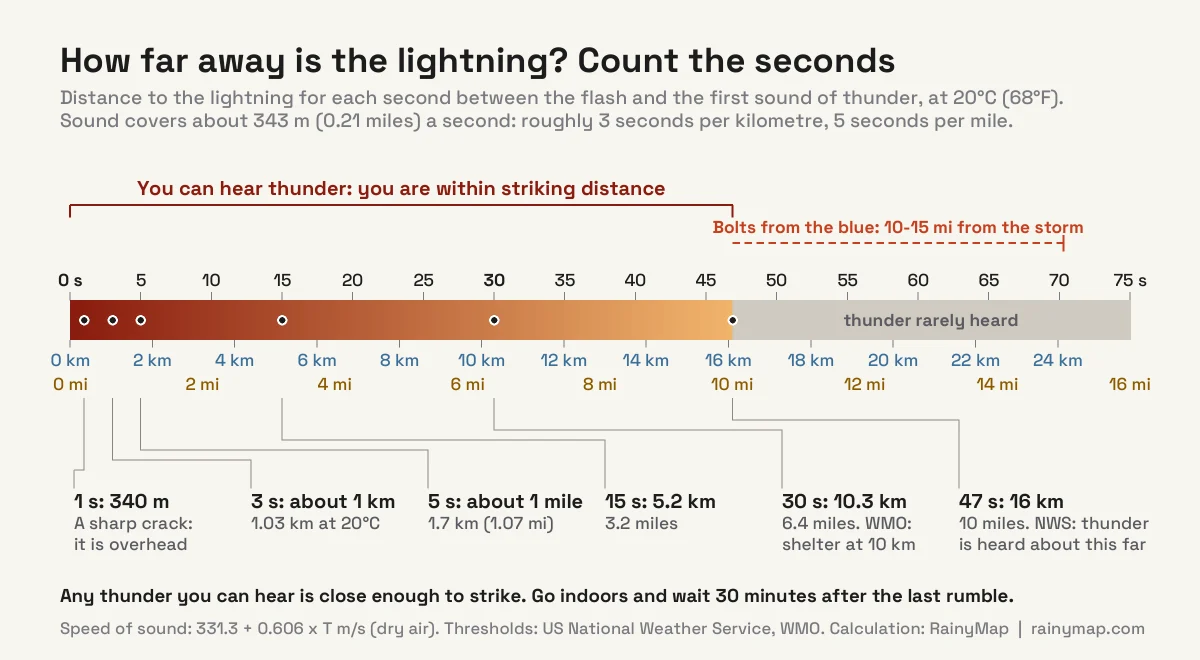
To work out how far away lightning is, count the seconds between the flash and the first sound of thunder, then divide by 3 for kilometres or by 5 for miles. Three seconds is about 1 km and five seconds is about a mile. If you can hear thunder at all, the lightning is usually within about 10 miles (16 km), which is close enough for the next strike to reach you.
Most of us learned the trick as children, counting “one-Mississippi, two-Mississippi” at a window. It works because the light from a flash arrives almost instantly, while thunder plods along at the speed of sound. We wanted to know how good the trick really is, so we ran the numbers. The short version: it is good enough, it is slightly off, and the error falls on the safe side. Oddly, the miles version quietly assumes the air is about −15°C.
Below you will find a calculator you can tap during a storm, a seconds-to-distance chart, what the sound of thunder tells you, how far lightning can be seen and heard, and why the old 30-30 rule was retired.
Lightning Distance at a Glance
- 1 second between flash and thunder is about 343 m (0.21 miles) at 20°C (68°F).
- 3 seconds is about 1 km, and 5 seconds is about 1 mile.
- 30 seconds is about 10 km (6.4 miles).
- Thunder can be heard for only about 10 miles (16 km), according to the US National Weather Service (NWS).
- “Bolts from the blue” can strike 10 to 15 miles from a thunderstorm (NWS).
- Stay in a safe shelter for at least 30 minutes after the last thunder (NWS).
Lightning Distance Calculator
Tap the button when you see the flash and again when you hear the first thunder, or type in the seconds you counted. Pick the air temperature if you know it; 20°C (68°F) is a fair guess for a summer storm.
Lightning distance calculator
About 3.4 km (2.1 miles) away
If you can hear it, it can reach you. Lightning can strike 10 miles (16 km) or more from a storm, so go indoors and stay there for 30 minutes after the last thunder.
The calculator uses the speed of sound in dry air at the temperature you choose. Light needs only about 33 millionths of a second to cover 10 km, so the delay you measure is, for any practical purpose, all thunder.
How to Count the Seconds Between Lightning and Thunder
- Start the moment you see the flash. A phone stopwatch is steadier than counting out loud.
- Stop at the first sound of thunder, not at the loudest boom. The first sound comes from the nearest part of the lightning.
- Divide. Seconds ÷ 3 = kilometres. Seconds ÷ 5 = miles.
- Repeat on the next few flashes. If the count keeps getting shorter, the storm is coming towards you.
- Do not stand outside doing the maths. If you heard thunder, you already have your answer: go in.
One detail most explanations skip: a flash is not a single point. It is a channel that can run for kilometres through the cloud and down to the ground, and thunder is made along all of it at once. The count therefore gives you the distance to the closest part of the flash, which may be a branch in the cloud above you rather than the spot where the bolt hit the ground. If you want the physics of the channel, our explainer on how lightning forms walks through it.
Lightning Distance Chart: Seconds to Kilometres and Miles
Here is the count converted to distance at 20°C (68°F). The rules of thumb give almost the same numbers; the next section explains the small differences.
| Flash to thunder | Distance (km) | Distance (miles) | What it means |
|---|---|---|---|
| 1 second | 0.34 km | 0.21 miles | Practically overhead. Expect a sharp crack, not a rumble |
| 2 seconds | 0.69 km | 0.43 miles | Very close. Get inside now |
| 3 seconds | 1.0 km | 0.64 miles | About 1 km: the "divide by 3" point |
| 5 seconds | 1.7 km | 1.1 miles | About 1 mile: the "divide by 5" point |
| 7 seconds | 2.4 km | 1.5 miles | Well within striking range |
| 10 seconds | 3.4 km | 2.1 miles | Well within striking range |
| 15 seconds | 5.2 km | 3.2 miles | NWS: lightning often strikes more than 3 miles from the centre of a storm |
| 20 seconds | 6.9 km | 4.3 miles | Still close enough for the next strike to reach you |
| 30 seconds | 10.3 km | 6.4 miles | Old 30-30 rule: you should already have been indoors. WMO: lightning within 10 km, go inside |
| 45 seconds | 15.5 km | 9.6 miles | Near the usual limit for hearing thunder |
| 60 seconds | 20.6 km | 12.8 miles | Rarely heard. If you do hear it, you are still inside "bolt from the blue" range |
Is Counting the Seconds Accurate? We Checked the Physics
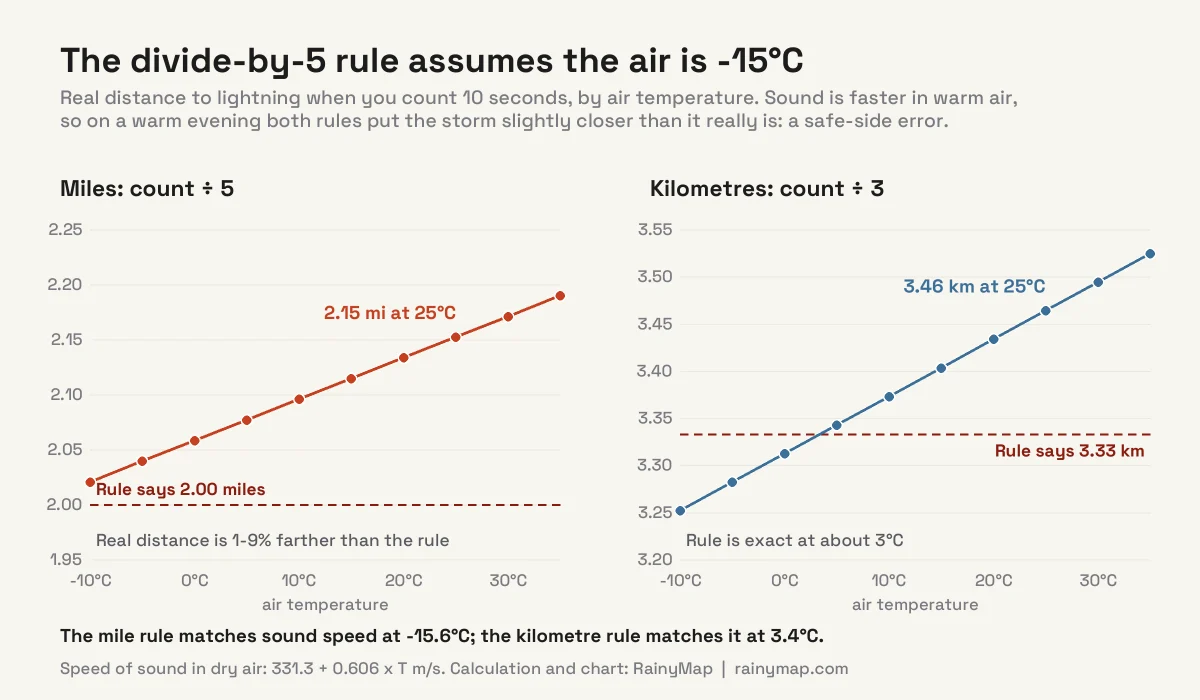
Sound speeds up as air warms, by about 0.6 metres per second for every degree Celsius. In dry air the speed works out at roughly 331.3 + 0.606 × T metres per second, where T is the temperature in °C. That gives 343 m/s at 20°C.
So on a 20°C day, sound needs 2.9 seconds to cover a kilometre and 4.7 seconds to cover a mile, not 3 and 5. We worked out which temperature each rule of thumb quietly assumes:
- Divide by 3 (kilometres) is exactly right at about 3°C (37°F). In a 25°C summer storm it puts the lightning about 4% closer than it really is.
- Divide by 5 (miles) is exactly right at about −15.6°C (4°F). That is far colder than the air under a summer thunderstorm, so in practice the rule always comes up short. At 25°C (77°F) it is about 7% short: count 10 seconds and the lightning is 2.15 miles away, not 2.
Both errors make the storm seem a little closer than it is. For a safety rule, that is the right direction to be wrong in.
| Air temperature | Speed of sound | Seconds per km | Seconds per mile | A 10-second count means |
|---|---|---|---|---|
| -10°C (14°F) | 325 m/s | 3.07 | 4.95 | 3.25 km / 2.02 mi |
| 0°C (32°F) | 331 m/s | 3.02 | 4.86 | 3.31 km / 2.06 mi |
| 10°C (50°F) | 337 m/s | 2.96 | 4.77 | 3.37 km / 2.10 mi |
| 20°C (68°F) | 343 m/s | 2.91 | 4.69 | 3.43 km / 2.13 mi |
| 30°C (86°F) | 349 m/s | 2.86 | 4.60 | 3.49 km / 2.17 mi |
Temperature is not the biggest source of error, though. These matter more:
- Your timing. Starting the count half a second late on a 3-second gap is a 17% error, more than anything the weather does.
- Wind. Sound rides on the wind. A 10 m/s (22 mph) wind blowing from the storm towards you shortens the delay by about 3%; blowing the other way, it lengthens it.
- Which part of the flash you hear first. As above, the count measures the distance to the nearest piece of the channel, not necessarily to the ground strike.
- Noise. Traffic, rain on a roof or a television can drown out the first faint sound. You then stop the count on a later, louder part of the rumble and overestimate the distance.
Our verdict: across normal storm weather, temperature moves the answer by less than 10%, and both rules always err towards "closer". That is accurate enough for the only decision that matters, which is whether to go inside. Once you can hear thunder, the answer is yes.
Crack or Rumble: What Does the Sound of Thunder Tell You?
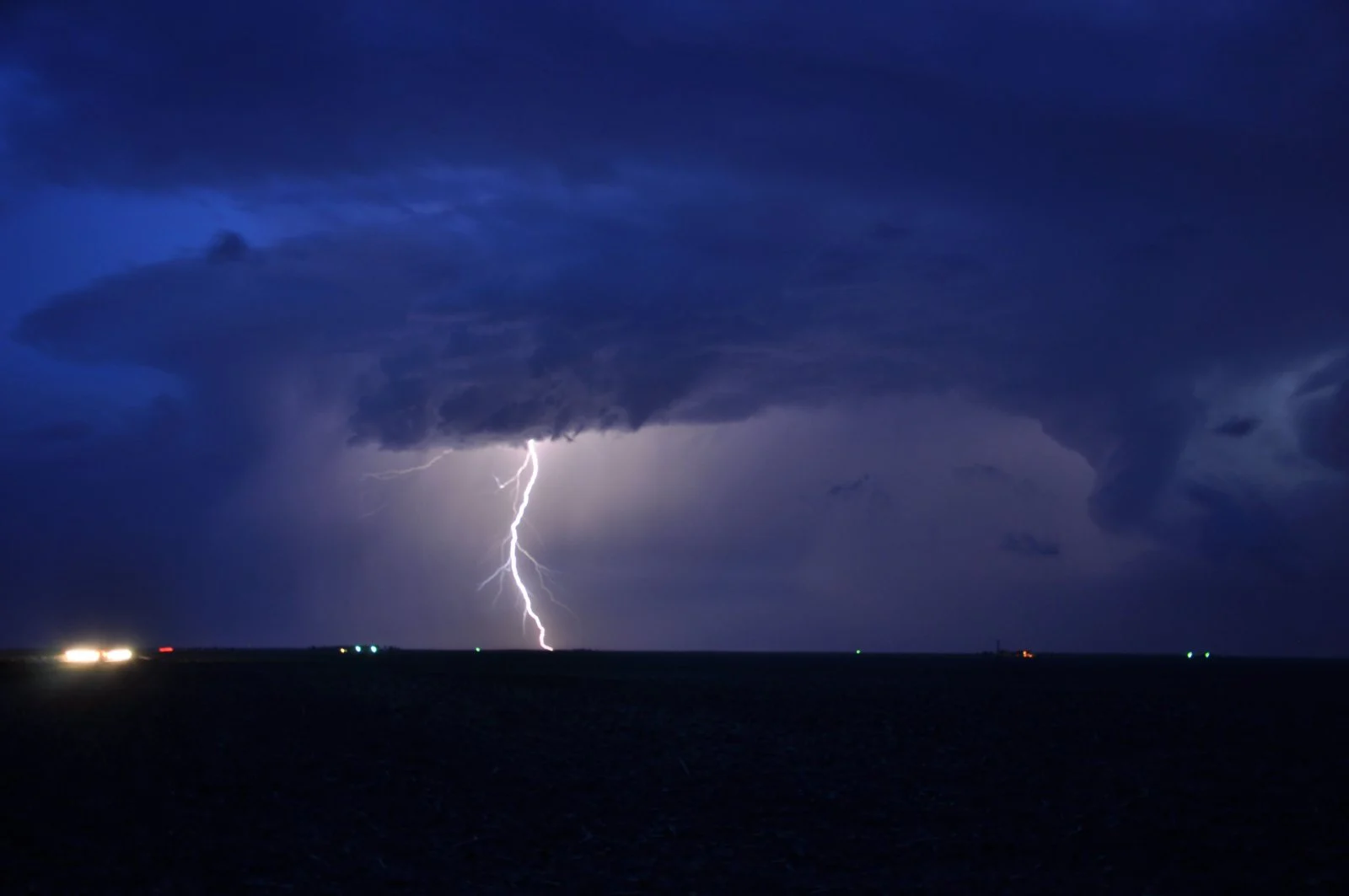
The sound itself is a rough rangefinder. A sudden, loud crack means the strike was very near: if the flash and the bang arrive together, it was within a few hundred metres, because one second of delay is about 343 m. The National Weather Service says that if thunder sounds more like a rumble, the lightning was at least several miles away.
The rumble happens because each part of the channel is a different distance from you. Sound from the nearest part arrives first and sound from the far end arrives last, which smears a single bang into a roll that can last more than 30 seconds. Over long distances the air also absorbs the high-pitched part of the sound faster than the low notes, so faraway thunder reaches you as a low growl rather than a crack.
How Far Away Can You Hear Thunder?
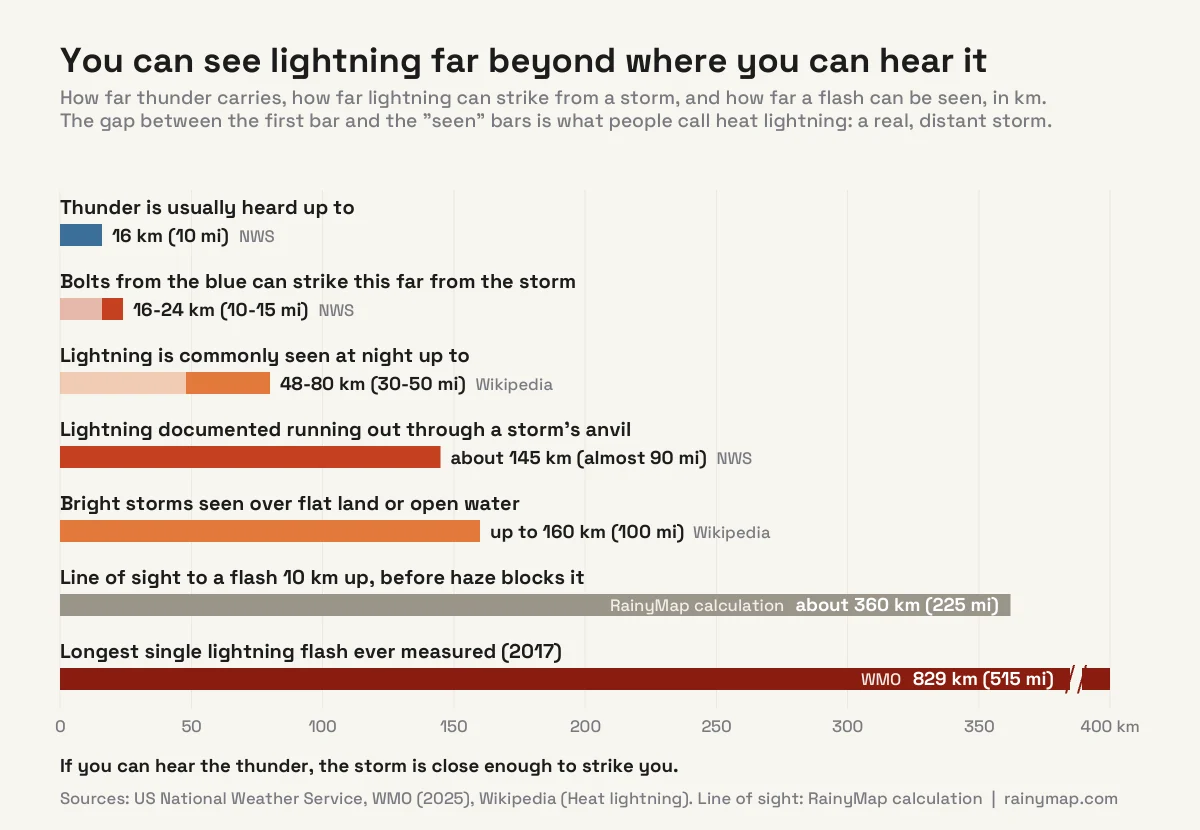
Usually about 10 miles (16 km), according to the NWS. On a very still night it can carry further; Wikipedia's lightning article gives a figure of about 20 miles (32 km). In a city, with traffic and wind, you may hear much less.
Distance alone does not explain the cut-off. Air normally gets colder with height, and sound bends towards colder, slower air, so thunder is gradually steered upwards, away from people on the ground. Beyond a certain distance it passes overhead and leaves a zone where you can see the flash but hear nothing at all. Hills, buildings and a wind blowing the wrong way shrink the range further.
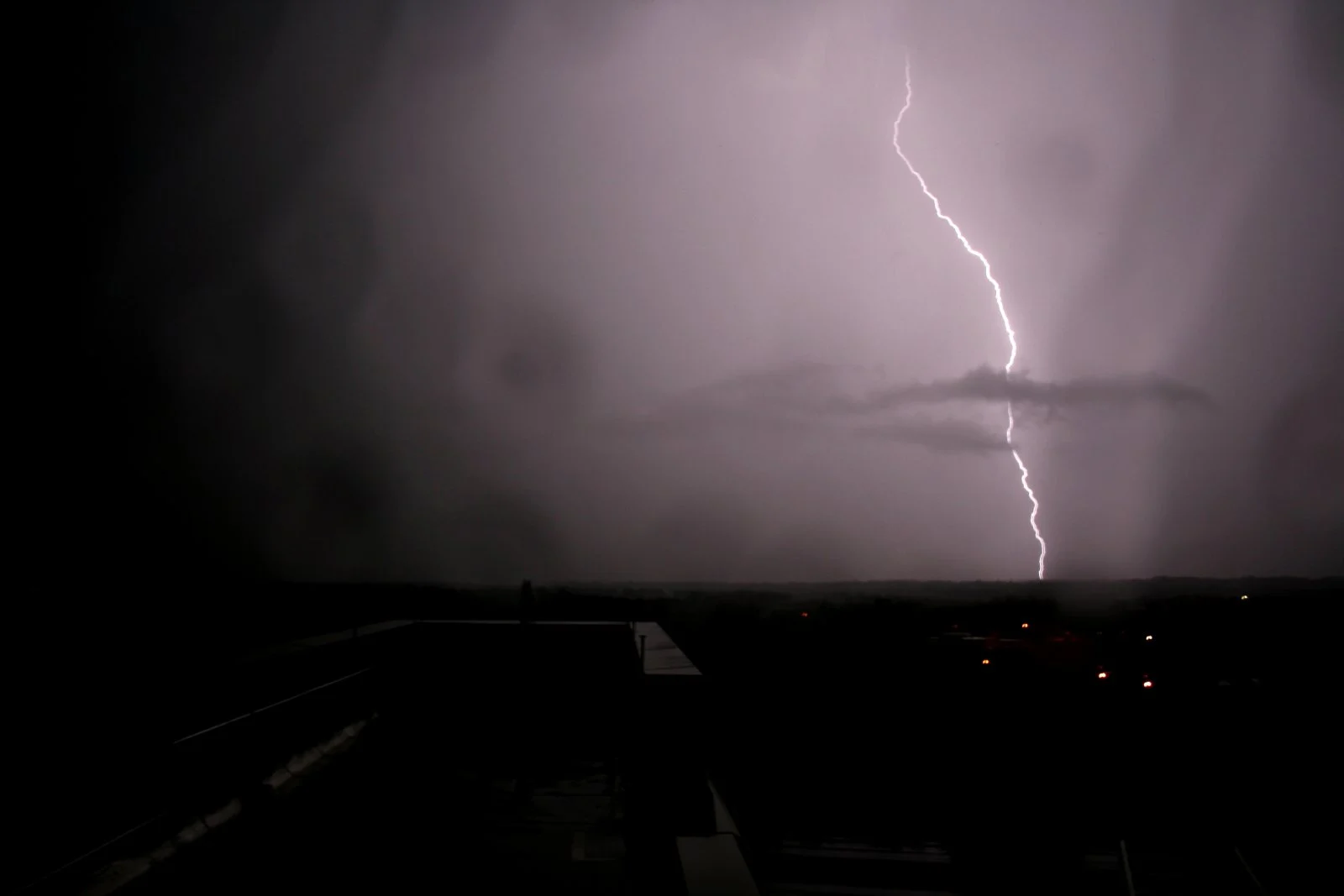
That 10-mile figure matters for safety, because it is also roughly how far lightning can reach out from a storm. The NWS sums it up simply: if you can hear thunder, you are likely within striking distance.
How Far Away Can You See Lightning? And Is Heat Lightning Real?
Much further than you can hear it. We did the geometry: a flash 10 km up in a tall storm cloud stays above the horizon for someone standing on the ground up to about 360 km (225 miles) away. The curve of the Earth is rarely what hides lightning.
The air is. Haze, humidity, rain and other clouds dim the flash long before it sinks below the horizon. According to Wikipedia's article on heat lightning, the brightest storms can be seen up to about 100 miles (160 km) away over flat land or open water, while 30 to 50 miles (48 to 80 km) is a more common limit at night.
That gap between seeing and hearing is the whole story of "heat lightning". The NWS says it is not a special type of lightning and has nothing to do with heat: it is simply the light from a thunderstorm too far away for you to hear its thunder, often reflected off higher clouds. The storm is real, and on a summer night it may be heading your way. Our live lightning map shows exactly where it is.
How Far Away Can Lightning Strike You?
Further than most people expect. The NWS says lightning often strikes more than three miles from the centre of a thunderstorm, and that "bolts from the blue" can strike 10 to 15 miles away, sometimes under a sky that looks clear.
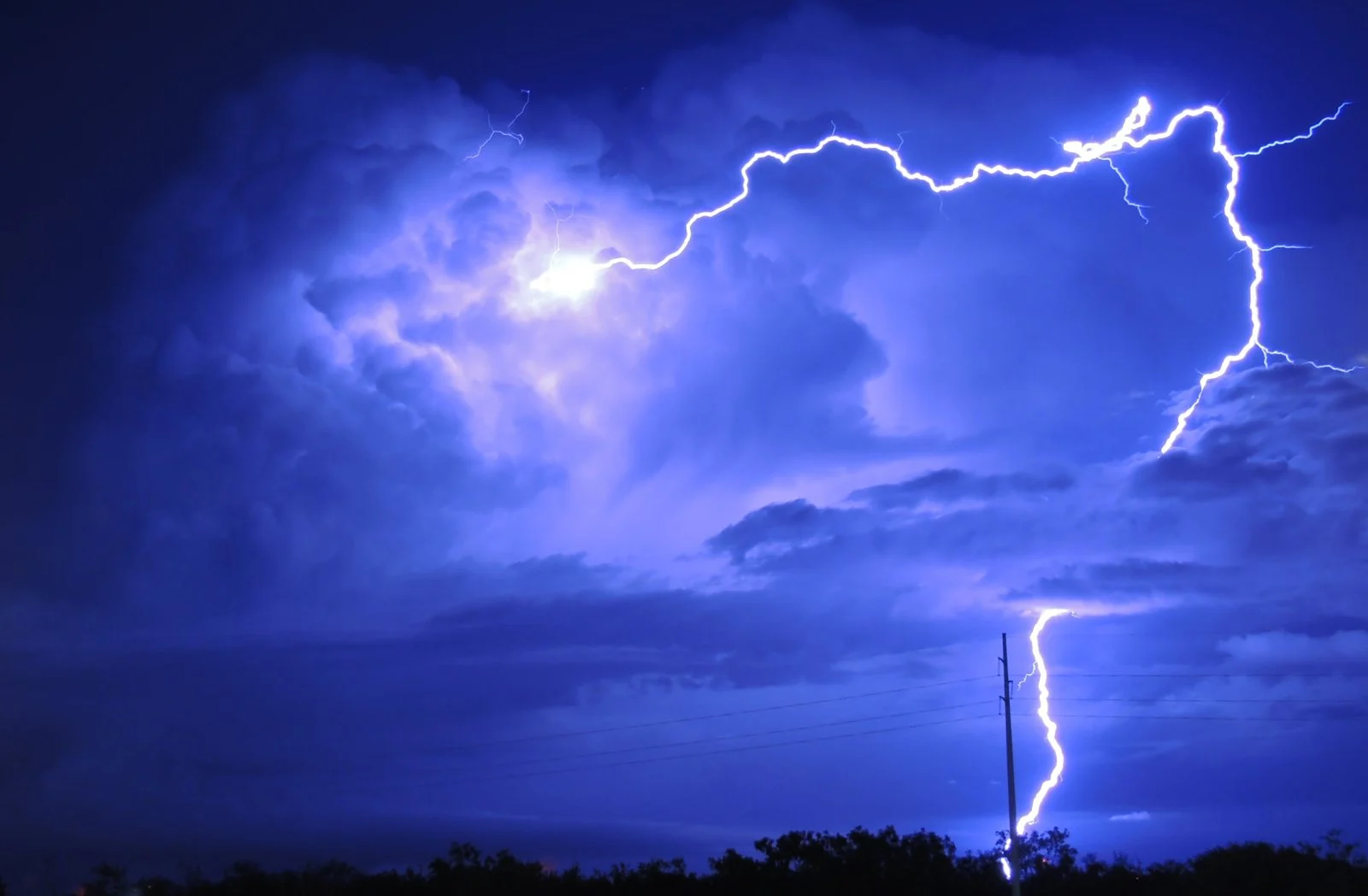
The next strike also does not politely land where the last one did. Citing research from NOAA's National Severe Storms Laboratory, the NWS says safety rules should assume successive flashes can be at least 10 to 13 km (6 to 8 miles) apart. Safety education used to work with 3 to 5 km.
Inside a storm system, lightning can travel astonishing distances sideways. The NWS mentions lightning documented running almost 90 miles out through a thunderstorm's anvil. In July 2025 the World Meteorological Organization certified a new record for the longest single flash: 829 km (515 miles), from eastern Texas to near Kansas City, during storms in October 2017. The longest-lasting flash on record lit up the sky over Uruguay and northern Argentina for 17.1 seconds on 18 June 2020.
None of this means a storm 100 miles away is about to hit you. It means the edge of a storm is much fuzzier than the edge of its rain, so "it isn't raining here yet" is not a safety margin. Our article on lightning myths covers more of these, and our guide to what causes thunderstorms explains how these storms build in the first place.
What Happened to the 30-30 Rule?
For years, lightning safety was taught as the 30-30 rule: be in a safe place when the gap between flash and thunder is 30 seconds or less (about 6 miles), and stay there for 30 minutes after the last thunder.
The first half has been retired. In a paper for the American Meteorological Society, William Roeder, then a meteorologist with the US Air Force's 45th Weather Squadron in Florida, explained the problem: many people remembered the rule as "go to a safe place at 30 seconds", not "already be there by then", and some meteorologists even taught it that way. The working group behind the US Lightning Safety Awareness Week therefore made hearing thunder the cue, with Roeder's slogan: When Thunder Roars, Go Indoors.
Roeder also cited a 2005 study suggesting that thunder gives enough warning in only about half of cases. He added that the true share is probably higher, because the study counted only cloud-to-ground strikes, and lightning inside the cloud comes before the first ground strike in about 75% of storms.
The second half survived. The NWS still tells people to stay in safe shelter for at least 30 minutes after the last thunder. Roeder called this part especially important, because by his reading of the research, half or more of lightning casualties happen after the storm has moved away or died out.
The WMO now adds a modern version for anyone with a lightning app or map: if reliable lightning data show lightning within 10 km, go to a lightning-safe building or vehicle.
How Far Away Is Lightning From Me Right Now?
Counting only works once you can hear thunder, and by then you should already be heading indoors. A live map shows strikes before their sound reaches you.
- Open RainyMap's real-time lightning map and tap Use My Location. The map centres on you.
- Look for the newest strikes. They are drawn in white for the first 20 minutes, then turn yellow, orange and red as they age. Our guide on how to read a lightning map explains every colour and symbol.
- Use the scale bar in the bottom-left corner of the map to judge the distance. If fresh strikes are within 10 km (about 6 miles), follow the WMO advice and go inside.
- Watch for a few minutes. If new strikes keep appearing closer to you, the storm is approaching. Our tips on when to check the radar before a storm help with the timing.
The map uses the community-run Blitzortung detection network, and new strikes appear within about 3 to 20 seconds. It is a great way to follow a storm, but its operators say the data are for information only, not for protecting life or property, so official warnings from your national weather service come first. For the technology behind it, see how lightning trackers work.
What Should You Do When the Count Gets Short?
- Go inside a substantial building with electricity or plumbing, or an enclosed, metal-topped vehicle with the windows up. These are the shelters the NWS recommends.
- Do not shelter under a tree. The NWS calls it the second leading cause of lightning casualties.
- Wait 30 minutes after the last thunder before going back out, even if the sun has come out.
- Once inside, stay off corded phones and away from plumbing and windows until the storm has passed.
The numbers are small but not zero. The NWS counted 21 lightning deaths in the United States in 2025 and 16 so far in 2026 (preliminary figures, last updated in September), against an average of about 20 a year. Most of this year's deaths happened in July and August.
Frequently Asked Questions
How far away is lightning if the thunder comes 5 seconds later?
About 1.7 km, or just over a mile, on a 20°C (68°F) day. The rules of thumb give 1 mile (5 ÷ 5) and 1.7 km (5 ÷ 3). That is well within striking range, so go indoors.
How far away is lightning if you count 10 seconds?
About 3.4 km, or 2.1 miles, at 20°C (68°F). The rules of thumb give 3.3 km and 2 miles. Lightning at that distance can easily reach you.
How far away is lightning if you count 2 seconds?
About 690 m, or less than half a mile (0.43 miles). That is very close. Get inside a substantial building or a hard-topped car straight away.
How far does thunder travel in one second?
About 343 metres (0.21 miles, or roughly 1,130 feet) in air at 20°C, and a little less in cold air. That is why each second between the flash and the thunder adds about a third of a kilometre, or a fifth of a mile.
How many seconds does thunder take to travel a mile?
About 4.7 seconds at 20°C (68°F) and about 4.9 seconds at 0°C (32°F). The traditional figure of 5 seconds is rounded up, so dividing by 5 slightly underestimates the distance.
How far away is lightning if you can see it but cannot hear thunder?
Usually more than about 10 miles (16 km), the normal range of thunder according to the US National Weather Service. It can also be closer if wind, traffic or hills mask the sound. Bright storms can be seen up to about 100 miles (160 km) away at night.
Is heat lightning real?
Not as a separate kind of lightning. The National Weather Service says heat lightning is simply light from a thunderstorm too far away for you to see the flash itself or hear its thunder, often reflected off higher clouds. Heat has nothing to do with it, and the storm may still move closer.
How close is lightning if you hear a loud crack?
Very close. A sharp crack or bang with almost no delay means the strike was within a few hundred metres, since one second of delay is about 343 m. Distant lightning sounds like a low rumble instead.
Is lightning 10 miles away dangerous?
Yes, it can be. The National Weather Service says "bolts from the blue" can strike 10 to 15 miles from a thunderstorm, and that if you can hear thunder you are likely within striking distance. Go indoors as soon as you hear thunder.
How long should you wait after the last thunder before going outside?
At least 30 minutes, according to the National Weather Service. Lightning safety research has found that many casualties happen as a storm moves away, when people think the danger has passed.
Does temperature change the flash-to-bang count?
Yes, slightly. Sound travels about 0.6 m/s faster for every 1°C of warming, so the same count means a longer distance on a hot day. By our calculation the divide-by-5 rule matches air at about −15.6°C, so on a 25°C (77°F) evening it underestimates the distance by about 7%.
What is the longest lightning flash ever recorded?
829 km (515 miles), from eastern Texas to near Kansas City in October 2017. The World Meteorological Organization certified the record in July 2025; the previous record was a 768 km flash on 29 April 2020.
Sources
Facts checked on 13 November 2026. Distances, temperature effects and line-of-sight figures are RainyMap's own calculations from the standard speed-of-sound formula.
- US National Weather Service: Understanding Lightning: Thunder
- US National Weather Service: Lightning Myths
- US National Weather Service: What is heat lightning?
- US National Weather Service: Lightning safety tips
- World Meteorological Organization: WMO certifies megaflash lightning record in USA (31 July 2025)
- William P. Roeder: Recent Changes in Lightning Safety (American Meteorological Society conference paper)