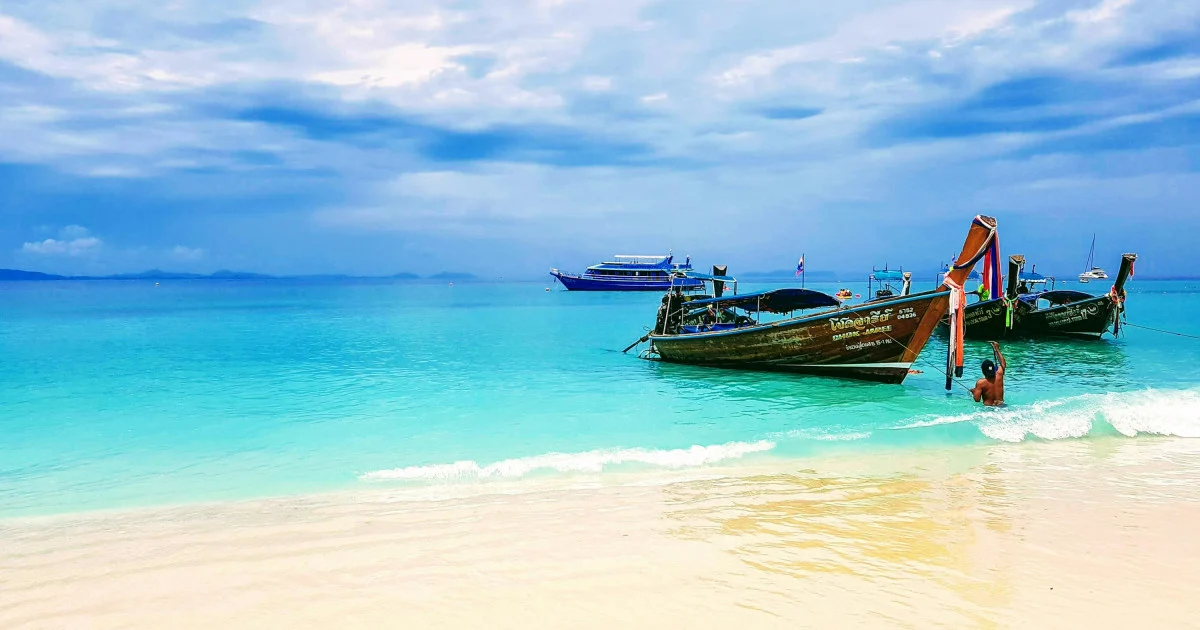
The best time to visit Phuket is November through April, when the southwest monsoon has passed, rainfall is at its lowest, and the Andaman Sea is calm enough for swimming, island-hopping, and diving, unlike the rough seas and heavy downpours of the May-to-October monsoon season.
Phuket’s Tropical Monsoon Climate: Two Seasons, Not Four
Phuket doesn’t really have four seasons, it has two: a dry season and a wet season, driven by the southwest monsoon. Temperatures stay warm and humid year-round, typically between 27-34C (81-93F), so the real question for planning a trip isn’t how hot it will be, it’s how much rain will fall and how rough the sea will get.
Phuket Weather by Month
The chart below shows average high and low temperatures, monthly rainfall, and Andaman Sea temperature for every month, based on long-term climate normals.
Jan
(90°/73°F)
4 rainy days
Sea Temp. 28°C
Feb
(91°/75°F)
4 rainy days
Sea Temp. 28°C
Mar
(93°/77°F)
6 rainy days
Sea Temp. 29°C
Apr
(93°/79°F)
11 rainy days
Sea Temp. 30°C
May
(90°/77°F)
19 rainy days
Sea Temp. 30°C
Jun
(88°/77°F)
19 rainy days
Sea Temp. 29°C
Jul
(88°/77°F)
20 rainy days
Sea Temp. 29°C
Aug
(88°/77°F)
21 rainy days
Sea Temp. 29°C
Sep
(86°/75°F)
23 rainy days
Sea Temp. 29°C
Oct
(88°/75°F)
20 rainy days
Sea Temp. 29°C
Nov
(88°/75°F)
13 rainy days
Sea Temp. 29°C
Dec
(88°/73°F)
7 rainy days
Sea Temp. 28°C
| Month | Avg. High | Avg. Low | Rainfall | Rainy Days | Sea Temp. |
|---|---|---|---|---|---|
| Jan | 32°C / 90°F | 23°C / 73°F | 35 mm | 4 | 28°C |
| Feb | 33°C / 91°F | 24°C / 75°F | 40 mm | 4 | 28°C |
| Mar | 34°C / 93°F | 25°C / 77°F | 75 mm | 6 | 29°C |
| Apr | 34°C / 93°F | 26°C / 79°F | 140 mm | 11 | 30°C |
| May | 32°C / 90°F | 25°C / 77°F | 260 mm | 19 | 30°C |
| Jun | 31°C / 88°F | 25°C / 77°F | 240 mm | 19 | 29°C |
| Jul | 31°C / 88°F | 25°C / 77°F | 230 mm | 20 | 29°C |
| Aug | 31°C / 88°F | 25°C / 77°F | 260 mm | 21 | 29°C |
| Sep | 30°C / 86°F | 24°C / 75°F | 320 mm | 23 | 29°C |
| Oct | 31°C / 88°F | 24°C / 75°F | 265 mm | 20 | 29°C |
| Nov | 31°C / 88°F | 24°C / 75°F | 140 mm | 13 | 29°C |
| Dec | 31°C / 88°F | 23°C / 73°F | 70 mm | 7 | 28°C |
Dry Season (November-April): Phuket’s Peak Season
The dry season is when Phuket earns its postcard reputation: mostly sunny days, low humidity for the tropics, and a calm Andaman Sea that makes island-hopping to Phi Phi, snorkeling, and diving genuinely reliable rather than weather-dependent. It’s unsurprisingly the busiest and most expensive stretch of the year, especially around Christmas and New Year, when hotel rates in Patong and Kata can double.
Monsoon Season (May-October): Rain, Rough Seas, and Real Savings
The southwest monsoon doesn’t mean rain all day, every day, it typically arrives as short, heavy downpours followed by sun, often within the same afternoon. What changes more than the rain itself is the sea: waves and currents on Phuket’s west-coast beaches become significantly rougher, which matters more for your trip than the rain does. In exchange, hotel prices drop substantially and the island is far less crowded.
Phuket’s Real Monsoon Hazard: Rip Currents, Not Just Rain
The single biggest weather-related risk in Phuket isn’t flooding, it’s drowning. Phuket records roughly 30 to 50 drowning deaths a year, and the large majority happen during monsoon season on west-coast beaches like Patong, Kata, and Karon, where rip currents can appear suddenly and pull even strong swimmers away from shore. On July 11, 2026, two British tourists had to be rescued after ignoring red-flag warnings and swimming into rough surf at Nai Thon Beach, one of many similar incidents each monsoon season.
Phuket’s beaches use a simple flag system: green means safe, yellow means caution, and red means no swimming, full stop. During monsoon season, red flags can fly from morning to evening for days at a time. If you do get caught in a rip current, the standard advice is not to swim against it, instead swim parallel to the shore until you’re clear of it, then angle back in. Since monsoon downpours and rough surf tend to arrive together, checking a live rain map or the live rain radar for Phuket before heading to the beach is a genuinely useful habit during the wet season, not just a rainy-day inconvenience.
Shoulder Months: November and Late April
Late April and November are the two windows worth considering if you want a compromise between weather and price. Late April sits right at the edge of the monsoon’s arrival, often still mostly dry with lower crowds than peak dry season. November is the tail end of the rains, seas are calming back down, and prices haven’t yet hit the December-January peak.
Frequently Asked Questions
What is the best month to visit Phuket?
December through February offers the most reliable weather: minimal rain, low humidity for the tropics, and the calmest seas of the year, making it the single best window for beaches and island-hopping.
Is it safe to swim in Phuket during monsoon season?
Not always. Rip currents on west-coast beaches become significantly more common and dangerous from May to October, and Phuket sees 30-50 drowning deaths a year, most during monsoon season. Always check the beach flag system, red means no swimming.
How much does it rain in Phuket during monsoon season?
September is the wettest month, with around 320mm of rain spread across 23 rainy days, though downpours are usually short and heavy rather than constant all-day rain.
Is Phuket cheaper to visit during monsoon season?
Yes, significantly. Hotel prices drop and crowds thin out from May through October, which is the trade-off for rougher seas and a higher chance of rain.
What is the coldest month in Phuket?
There isn’t really a cold month. Even the coolest nights, in January and December, stay around 23°C (73°F), and daytime highs remain in the low 30s Celsius (upper 80s Fahrenheit) year-round.
What are the red flags on Phuket beaches?
A green flag means safe to swim, yellow means caution advised, and red means swimming is prohibited due to dangerous conditions such as rip currents or rough surf, most common during monsoon season.
In Conclusion
For the most reliable trip, aim for December through February, or accept a small weather gamble in November or late April for fewer crowds. If you do visit during monsoon season, the rain is rarely the real problem, respecting the beach flags and rip currents is what actually keeps a Phuket trip safe.