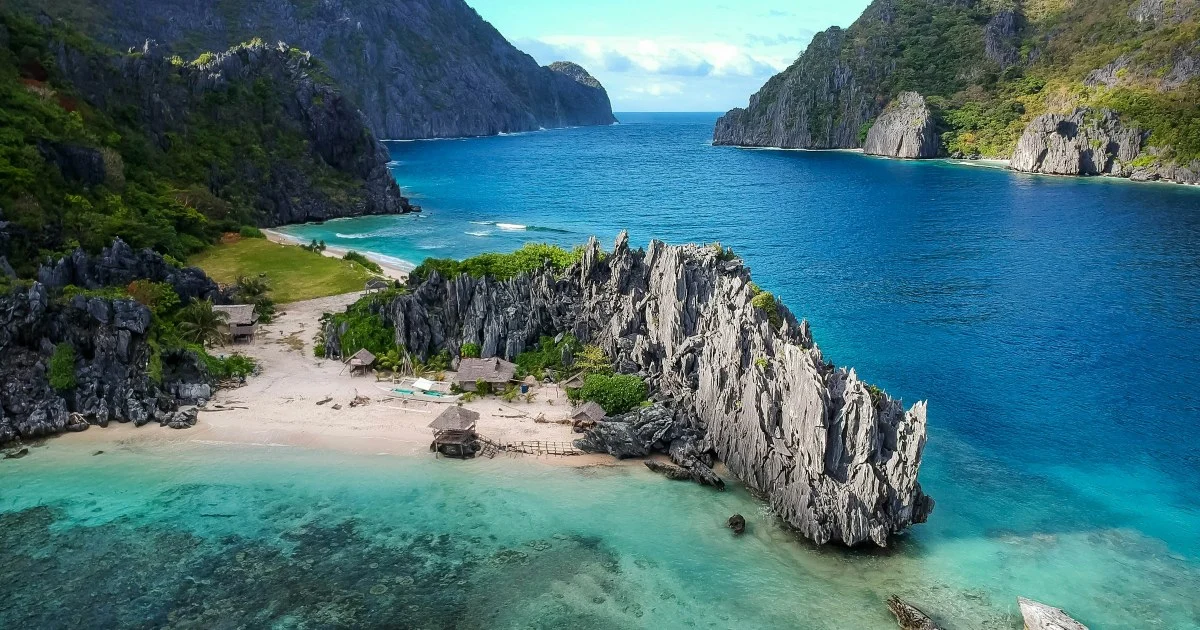
The best time to visit the Philippines is January through April, the cool, dry season when rainfall is lowest and typhoon risk is at its lowest, unlike the hot, humid buildup of May or the wet, typhoon-prone stretch from June through November.
The Philippines’ Two Seasons: Dry and Wet, Split by the Monsoon
The Philippines has a tropical climate split into a dry season and a wet season by the shifting monsoon, further complicated by being one of the most typhoon-exposed countries on Earth. Temperatures stay warm year-round, typically between 26-34C (79-93F), so the real planning question isn’t heat, it’s rainfall and storm risk.
Philippines Weather by Month
The chart below shows average high and low temperatures, monthly rainfall, and sea temperature for Manila and the central Philippines, based on long-term climate normals.
Jan
(86°/70°F)
3 rainy days
Sea Temp. 27°C
Feb
(88°/70°F)
2 rainy days
Sea Temp. 27°C
Mar
(91°/73°F)
3 rainy days
Sea Temp. 28°C
Apr
(93°/75°F)
4 rainy days
Sea Temp. 29°C
May
(93°/77°F)
12 rainy days
Sea Temp. 29°C
Jun
(90°/77°F)
18 rainy days
Sea Temp. 29°C
Jul
(88°/75°F)
22 rainy days
Sea Temp. 28°C
Aug
(86°/75°F)
23 rainy days
Sea Temp. 28°C
Sep
(88°/75°F)
21 rainy days
Sea Temp. 28°C
Oct
(88°/75°F)
15 rainy days
Sea Temp. 28°C
Nov
(88°/73°F)
10 rainy days
Sea Temp. 28°C
Dec
(86°/72°F)
6 rainy days
Sea Temp. 27°C
| Month | Avg. High | Avg. Low | Rainfall | Rainy Days | Sea Temp. |
|---|---|---|---|---|---|
| Jan | 30°C / 86°F | 21°C / 70°F | 15 mm | 3 | 27°C |
| Feb | 31°C / 88°F | 21°C / 70°F | 10 mm | 2 | 27°C |
| Mar | 33°C / 91°F | 23°C / 73°F | 15 mm | 3 | 28°C |
| Apr | 34°C / 93°F | 24°C / 75°F | 35 mm | 4 | 29°C |
| May | 34°C / 93°F | 25°C / 77°F | 130 mm | 12 | 29°C |
| Jun | 32°C / 90°F | 25°C / 77°F | 245 mm | 18 | 29°C |
| Jul | 31°C / 88°F | 24°C / 75°F | 425 mm | 22 | 28°C |
| Aug | 30°C / 86°F | 24°C / 75°F | 455 mm | 23 | 28°C |
| Sep | 31°C / 88°F | 24°C / 75°F | 385 mm | 21 | 28°C |
| Oct | 31°C / 88°F | 24°C / 75°F | 195 mm | 15 | 28°C |
| Nov | 31°C / 88°F | 23°C / 73°F | 100 mm | 10 | 28°C |
| Dec | 30°C / 86°F | 22°C / 72°F | 65 mm | 6 | 27°C |
Cool Dry Season (December-February): The Best All-Round Window
This is the Philippines at its most comfortable: lower humidity, minimal rain, and warm rather than oppressive heat, ideal for island-hopping in Palawan and Boracay, diving, and city sightseeing in Manila or Cebu. It’s also the busiest and priciest stretch of the year, especially around Christmas, New Year, and Holy Week in spring.
Hot Dry Season (March-May): Sweltering but Still Rain-Free
March through May brings the hottest temperatures of the year, with April and May regularly hitting highs of 34C (93F) and humidity building steadily toward the monsoon. Rainfall is still low through most of this period, so beaches and diving conditions remain excellent, it’s simply a hotter, muggier version of the dry season.
The Philippines’ Real Hazard: One of the Most Typhoon-Exposed Countries on Earth
The Philippines sits directly in the path of the Pacific’s typhoon belt. On average, around 20 tropical cyclones enter the Philippine Area of Responsibility each year, and 8 to 9 of them make landfall or cause significant impact through wind, rain, or coastal flooding, among the highest totals of any country. Nearly 70% of these storms develop between July and October, with northern and eastern Luzon and the Bicol region, often the very first landfall point for Pacific typhoons, facing the heaviest exposure.
The Philippine Atmospheric, Geophysical and Astronomical Services Administration (PAGASA) tracks every system and issues Public Storm Warning Signals numbered 1 to 5, escalating with wind strength, which govern school and business closures and ferry or flight suspensions. Because the country is a sprawling archipelago, a signal in one region often means calm skies a few hundred kilometres away, worth checking conditions for your specific islands rather than assuming a storm affects the whole country at once. Checking a live rain map or the live rain radar for Manila alongside official PAGASA warnings is a genuinely useful habit during typhoon season.
Wet Season (June-November): Rain, Humidity, and Regional Variation
The southwest monsoon, locally called Habagat, brings the heaviest rain to western-facing coasts, including Manila and western Palawan, from roughly June through September, while eastern seaboards face more of their rain risk from typhoons and trade winds at different points in the season. August is typically the wettest month nationally, averaging around 455mm of rain, but this wet season rarely means uniform rain everywhere at once across the archipelago’s more than 7,000 islands.
Frequently Asked Questions
What is the best month to visit the Philippines?
January and February are generally best, combining the coolest, driest conditions of the year with typhoon risk at its lowest point.
How many typhoons hit the Philippines each year?
Around 20 tropical cyclones enter the Philippine Area of Responsibility annually, with 8 to 9 typically making landfall or causing significant impact, peaking between July and October.
What is PAGASA’s storm signal system?
PAGASA issues Public Storm Warning Signals numbered 1 through 5, indicating escalating wind danger, which determine school and business closures and transport suspensions during a tropical cyclone.
Is the whole Philippines rainy at the same time?
No. As an archipelago, rainfall varies significantly by region and coast, western-facing areas like Manila see the heaviest monsoon rain from June to September, while other islands can stay comparatively dry during the same stretch.
What is the rainiest month in Manila?
August is typically the wettest month, averaging around 455mm of rain across 23 rainy days, at the peak of the southwest monsoon.
Is it safe to travel to the Philippines during typhoon season?
Generally yes with flexible planning. PAGASA’s warning signals and advance flight or ferry cancellations give travellers notice, though it’s worth avoiding outdoor-heavy itineraries or booking flexible tickets during the July-October peak.
In Conclusion
For the most reliable trip, aim for January or February. If you’re travelling during the wet season, remember the Philippines is an archipelago, a typhoon warning in one region rarely means the whole country is affected, so check conditions for your specific islands rather than the country as a whole.