Thunderstorms form when three ingredients come together: moisture, rising warm air, and instability in the atmosphere. Understanding this recipe explains why storms tend to erupt on hot, humid afternoons and why some regions see far more of them than others.
The Three Key Ingredients
- Moisture: Water vapor near the surface, often pulled in from oceans, lakes, or humid air masses, provides the fuel that condenses into clouds and eventually rain.
- Lift: Warm air needs a trigger to rise, this can come from the sun heating the ground unevenly, a cold front pushing under warmer air, or air being forced upward over mountains.
- Instability: If the atmosphere cools quickly enough with altitude, rising air keeps accelerating upward instead of settling back down, allowing towering storm clouds to build.
From Cumulus to Cumulonimbus
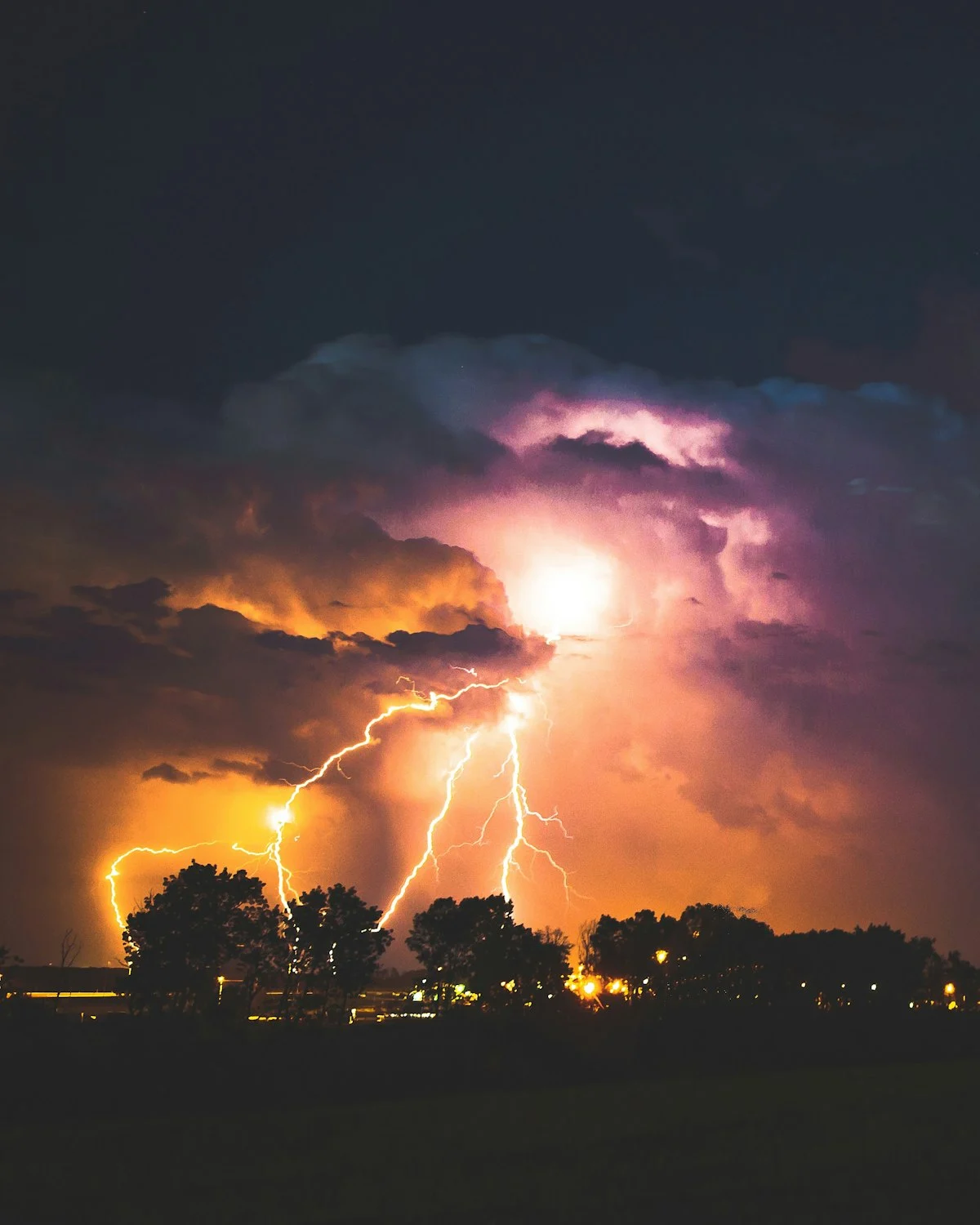
A thunderstorm begins life as an ordinary cumulus cloud. As warm, moist air continues rising, the cloud grows taller, eventually forming a cumulonimbus cloud that can stretch miles into the atmosphere. Inside, strong updrafts and downdrafts collide, generating the static charge that produces lightning, which you can track live on our real-time lightning map.
Why Afternoons and Evenings
The sun’s heating peaks in the early-to-mid afternoon, which is exactly when the ground has absorbed enough energy to trigger strong updrafts. That’s why single-cell thunderstorms are so often an afternoon or early evening phenomenon during warm months.
Single-Cell, Multi-Cell, and Supercell Storms
Most thunderstorms are short-lived single-cell storms that burn themselves out within an hour. Under stronger wind shear, storms can organize into multi-cell clusters or rotating supercells, the type most likely to produce severe weather like large hail and tornadoes.
Tracking a Storm as It Develops
Watching a rain map alongside a wind map lets you see a storm cell intensify in real time, heavier rainfall colors appearing as the updraft strengthens, and shifting wind patterns as the system organizes.
The Three Ingredients
Every thunderstorm needs the same three things, and forecasters check for all three when assessing storm risk.
- Moisture. Water vapour in the lower atmosphere provides the fuel. Without it, rising air produces nothing.
- Instability. Air that is warmer than its surroundings keeps rising on its own once nudged upward. Strong surface heating beneath cooler air aloft creates this.
- Lift. Something to give the initial nudge — a cold front, a sea breeze, a mountain slope, or simply a patch of ground heating faster than its neighbours.
A fourth ingredient, wind shear, does not create storms but determines what kind you get. Shear is a change in wind speed or direction with height. Without it, a storm’s own rain falls back into its updraught and chokes it within an hour. With it, the updraught and downdraught separate, and the storm can sustain itself for hours.
The Three Stages
Developing. Warm moist air rises, cools, and condenses into a cumulus cloud that grows visibly upward. Everything is moving up; no rain yet reaches the ground.
Mature. The cloud reaches the stable layer at the top of the troposphere and spreads sideways into the classic anvil. Rain begins, dragging cool air down with it. Updraught and downdraught coexist, and this is when lightning, heavy rain, hail and gusty winds occur.
Dissipating. The downdraught eventually cuts off the inflow of warm air feeding the updraught. Without fuel the storm rains itself out. An ordinary single-cell storm completes all three stages in under an hour.
Why Some Storms Last All Afternoon
Supercells are the exception, and shear is why. In a strongly sheared environment the updraught tilts, so rain falls away from rather than into it. The updraught can then rotate, forming a mesocyclone, and the storm becomes a self-sustaining system lasting many hours. Supercells produce most large hail and nearly all strong tornadoes.
Frequently Asked Questions
What causes thunderstorms?
Three ingredients together: moisture in the lower atmosphere, instability where air is warmer than its surroundings so it keeps rising, and a lifting mechanism such as a front, sea breeze or heated ground to start the air moving upward.
Why do thunderstorms happen mostly in the afternoon?
Because surface heating drives instability. The ground warms through the day, reaching peak temperature in mid to late afternoon, which is when rising air is most buoyant. Over oceans, where the surface heats far less, storms often peak overnight instead.
How long does a thunderstorm last?
An ordinary single-cell storm completes its life cycle in under an hour, because its own downdraught cuts off the warm air feeding it. Supercells, which form in strongly sheared environments, can persist for many hours.
What is wind shear and why does it matter?
Wind shear is a change in wind speed or direction with height. It does not create storms but determines their organisation: without shear a storm chokes on its own rain, while with it the updraught and downdraught separate and the storm can sustain itself.
What is a supercell?
A thunderstorm with a persistent rotating updraught, called a mesocyclone, made possible by strong wind shear. Supercells are long-lived and produce most large hail and nearly all strong tornadoes.
In Conclusion
Thunderstorms are the atmosphere’s way of releasing built-up energy from heat and moisture. Once you know the ingredients, moisture, lift, and instability, it becomes much easier to anticipate when and where the next storm is likely to form.
To identify the clouds that signal developing storms, see our guide to cloud types explained.