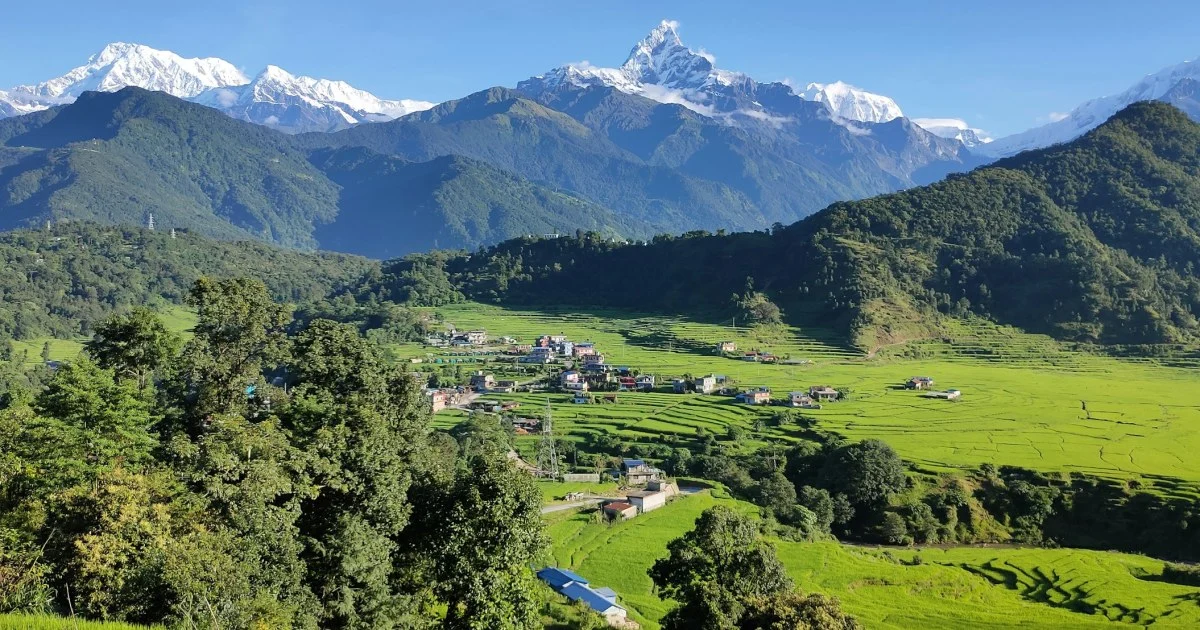
The best time to visit Nepal is October and November, when the summer monsoon has cleared the air, mountain views are at their sharpest, and trails are dry, unlike the cloud-covered, leech-ridden trails of the June-September monsoon or the bitter high-altitude cold of peak winter.
Nepal’s Trekking Climate: Monsoon Rules Everything, Even in the Mountains
Nepal’s seasons are shaped by the same South Asian monsoon that governs the plains of India, even though most visitors come for the mountains. Kathmandu Valley temperatures swing from near-freezing winter nights to warm pre-monsoon days, but altitude changes everything: trekkers heading to Everest Base Camp or Annapurna face conditions dramatically colder, windier, and snowier than the valley figures below suggest.
Kathmandu Weather by Month
The chart below shows average high and low temperatures and monthly rainfall in Kathmandu for every month, based on long-term climate normals. Trekking routes at altitude are dramatically colder and wetter than these valley figures.
Jan
(64°/36°F)
1 rainy days
Feb
(68°/41°F)
2 rainy days
Mar
(77°/48°F)
3 rainy days
Apr
(82°/55°F)
5 rainy days
May
(82°/61°F)
9 rainy days
Jun
(82°/66°F)
15 rainy days
Jul
(81°/68°F)
21 rainy days
Aug
(81°/68°F)
20 rainy days
Sep
(81°/64°F)
12 rainy days
Oct
(77°/55°F)
4 rainy days
Nov
(72°/45°F)
1 rainy days
Dec
(66°/37°F)
1 rainy days
| Month | Avg. High | Avg. Low | Rainfall | Rainy Days |
|---|---|---|---|---|
| Jan | 18°C / 64°F | 2°C / 36°F | 15 mm | 1 |
| Feb | 20°C / 68°F | 5°C / 41°F | 25 mm | 2 |
| Mar | 25°C / 77°F | 9°C / 48°F | 30 mm | 3 |
| Apr | 28°C / 82°F | 13°C / 55°F | 55 mm | 5 |
| May | 28°C / 82°F | 16°C / 61°F | 120 mm | 9 |
| Jun | 28°C / 82°F | 19°C / 66°F | 240 mm | 15 |
| Jul | 27°C / 81°F | 20°C / 68°F | 365 mm | 21 |
| Aug | 27°C / 81°F | 20°C / 68°F | 320 mm | 20 |
| Sep | 27°C / 81°F | 18°C / 64°F | 175 mm | 12 |
| Oct | 25°C / 77°F | 13°C / 55°F | 50 mm | 4 |
| Nov | 22°C / 72°F | 7°C / 45°F | 8 mm | 1 |
| Dec | 19°C / 66°F | 3°C / 37°F | 3 mm | 1 |
Autumn (October-November): Nepal’s Best and Busiest Trekking Season
October brings Nepal’s clearest skies of the year, the best mountain visibility on the entire Everest and Annapurna trails, and the country’s two biggest festivals, Dashain and Tihar, arriving back to back. It’s unsurprisingly the single most popular month for trekking, so trails and teahouses along the classic routes fill up well in advance. November holds onto that clarity while crowds thin out slightly, making it a close second choice.
Spring (March-May): Nepal’s Second Trekking Window
Spring brings rhododendron forests into bloom across the mid-hills, mild daytime temperatures, and a second reliable trekking season, though visibility is typically a little hazier than autumn’s crisp post-monsoon air. It’s a good alternative for travellers who want good weather with smaller crowds than the October peak.
Nepal’s Real Hazard: Altitude, Not Just Rain
Monsoon season (June-September) brings landslides that close mountain roads and thick cloud cover that grounds flights to Lukla, the gateway airstrip for Everest region treks, for days at a time. But the more consistent danger, in every season, is altitude. An estimated 3 to 15 trekkers die on the Everest Base Camp trek alone each year, and roughly 80% of altitude-sickness deaths on Nepal’s trekking routes happen because people ascended too fast without giving their bodies time to acclimatize.
Lukla’s airport adds its own risk: with a runway just 527 metres long set against a mountainside, it’s routinely named one of the world’s most dangerous airports, and flights are frequently delayed or cancelled by cloud, wind, or poor visibility, monsoon season especially. Budgeting spare days into any Everest region itinerary isn’t optional, it’s how experienced trekkers handle both the mountain and the airstrip. Checking a live rain map or the live rain radar for Kathmandu before a Lukla flight or a trailhead departure is a genuinely useful habit during monsoon season, when cloud and rain can build quickly in the mountains.
Winter (December-February): Cold, Clear, and Quiet
Kathmandu stays mild by day even in winter, but temperatures plunge overnight at altitude, and high passes above roughly 5,000 metres can close entirely. Lower-altitude treks, like Poon Hill or the lower stretches of the Annapurna and Everest routes, remain feasible through December, though January’s cold makes higher routes considerably harder going.
Frequently Asked Questions
What is the best month to visit Nepal?
October is widely considered the best month, combining the clearest mountain views of the year with Nepal’s two biggest festivals, Dashain and Tihar. November is a close second with slightly smaller crowds.
Is monsoon a bad time to trek in Nepal?
Generally yes, on the classic routes. Monsoon (June-September) brings heavy rain, leeches, landslides, and clouds that block mountain views, though rain-shadow regions like Upper Mustang and Dolpo stay comparatively dry and trekkable.
How dangerous is altitude sickness on the Everest Base Camp trek?
An estimated 3 to 15 trekkers die on the route each year out of roughly 30,000 who attempt it, and about 80% of those deaths are linked to altitude sickness from ascending too quickly rather than falls or exposure.
Can you trek to Everest Base Camp in winter?
Yes, December is feasible for experienced, well-equipped trekkers, though January’s extreme cold makes it considerably harder and less advisable for most people.
Why is Lukla airport considered dangerous?
Lukla’s runway is only 527 metres long and set on a mountainside, with no room for error on approach or takeoff, and frequent cloud, wind, and poor visibility cause regular flight delays and cancellations.
Is spring or autumn better for trekking in Nepal?
Autumn (October-November) has clearer skies and better mountain visibility, plus Nepal’s biggest festivals. Spring (March-May) offers rhododendron blooms and smaller crowds, but slightly hazier conditions.
In Conclusion
For the clearest views and driest trails, aim for October or November. If altitude is part of your trip, the mountains deserve more respect than the monsoon rains ever will, acclimatize slowly, build spare days around Lukla flights, and treat any altitude symptoms seriously.