The best time to visit South Korea is September to November, when the summer monsoon (jangma) has ended, humidity drops, and the country’s autumn foliage peaks, unlike the sweltering, storm-prone months of July-August or the sub-zero cold of January.
South Korea’s Four Seasons: A Climate Built Around the Summer Monsoon
South Korea has four genuinely distinct seasons, closer to Japan or the northeastern United States than to tropical Asia, but summer is dominated by jangma, the East Asian monsoon’s Korean rainy season, and by typhoons that occasionally track up from the Pacific. Temperatures swing dramatically across the year, from well below freezing in January to above 30C (86F) in August, and the figures below are for Seoul, the country’s main gateway.
Seoul Weather by Month
The chart below shows average high and low temperatures and monthly rainfall for every month, based on Korea Meteorological Administration long-term normals for Seoul.
Jan
(34°/21°F)
4 rainy days
Feb
(39°/25°F)
4 rainy days
Mar
(52°/34°F)
7 rainy days
Apr
(64°/45°F)
8 rainy days
May
(73°/55°F)
9 rainy days
Jun
(81°/64°F)
10 rainy days
Jul
(84°/72°F)
15 rainy days
Aug
(86°/73°F)
14 rainy days
Sep
(79°/63°F)
9 rainy days
Oct
(66°/46°F)
6 rainy days
Nov
(52°/34°F)
7 rainy days
Dec
(37°/23°F)
5 rainy days
| Month | Avg. High | Avg. Low | Rainfall | Rainy Days |
|---|---|---|---|---|
| Jan | 1°C / 34°F | -6°C / 21°F | 21 mm | 4 |
| Feb | 4°C / 39°F | -4°C / 25°F | 27 mm | 4 |
| Mar | 11°C / 52°F | 1°C / 34°F | 47 mm | 7 |
| Apr | 18°C / 64°F | 7°C / 45°F | 65 mm | 8 |
| May | 23°C / 73°F | 13°C / 55°F | 106 mm | 9 |
| Jun | 27°C / 81°F | 18°C / 64°F | 133 mm | 10 |
| Jul | 29°C / 84°F | 22°C / 72°F | 395 mm | 15 |
| Aug | 30°C / 86°F | 23°C / 73°F | 300 mm | 14 |
| Sep | 26°C / 79°F | 17°C / 63°F | 150 mm | 9 |
| Oct | 19°C / 66°F | 8°C / 46°F | 50 mm | 6 |
| Nov | 11°C / 52°F | 1°C / 34°F | 51 mm | 7 |
| Dec | 3°C / 37°F | -5°C / 23°F | 24 mm | 5 |
Autumn (September-November): South Korea’s Best All-Round Season
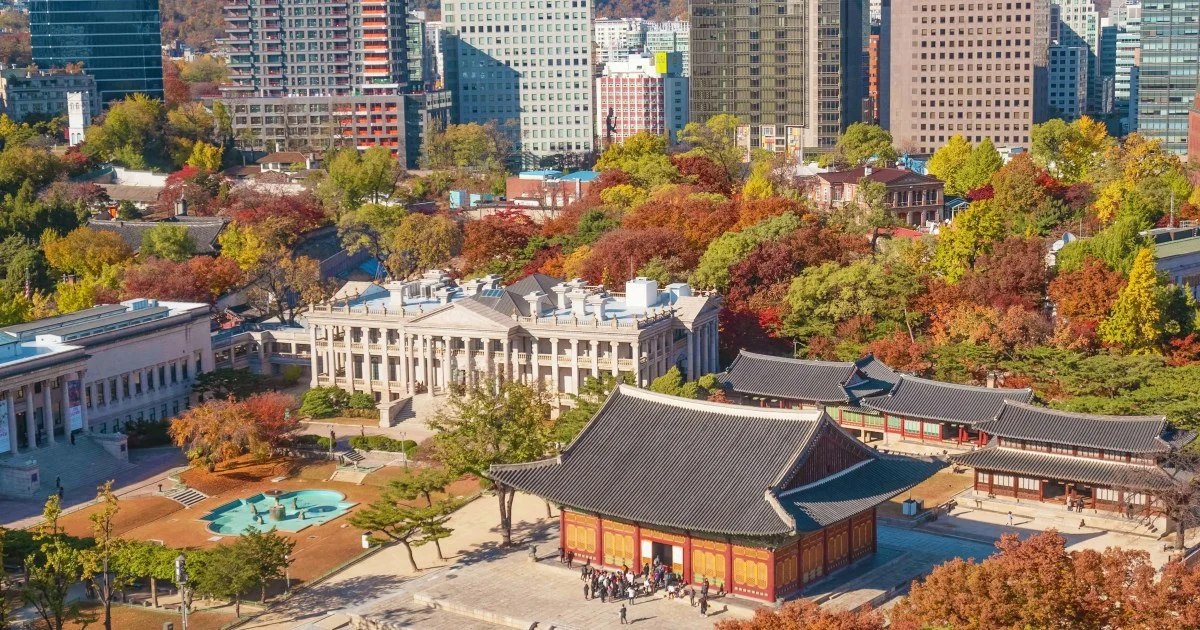
Once jangma and typhoon season clear out, autumn brings South Korea’s most reliable weather: clear skies, mild temperatures, and low humidity. Autumn foliage (danpung) typically peaks from late October into early November, drawing huge crowds to mountains like Seoraksan and Naejangsan, and this is widely considered the single best season for hiking countrywide.
Spring (March-May): Cherry Blossoms Before the Rains
Spring brings mild, steadily warming temperatures and Korea’s cherry blossom season (beotkkot), typically peaking in late March to early April depending on the region and year. Rainfall stays relatively light through spring, building gradually until jangma arrives at the end of the season.
South Korea’s Real Hazard: Record Monsoon Flooding
Jangma, the East Asian monsoon’s Korean phase, typically runs from late June through July, and July is by far the wettest month, averaging 395mm of rain. In August 2022, Seoul recorded its heaviest rainfall in over 80 years, with rates peaking at 141.5mm in a single hour, flooding the Gangnam district and killing at least 9 people across the capital region. The disaster drew international attention partly because it exposed the risk faced by residents of banjiha, semi-basement apartments common in Seoul, some of whom drowned in their homes as floodwater rose faster than they could escape.
Typhoon season overlaps with the tail of jangma, running roughly July through September, and South Korea is typically affected by at least one typhoon making a close pass or direct hit most years, bringing further flooding and wind damage risk on top of the monsoon. Checking a live rain map or the live rain radar for Seoul before heading out during jangma is a genuinely useful habit, given how quickly rainfall rates can spike.
Winter (December-February): Cold, Dry, and Good for Skiing
Winter is cold and notably dry, a sharp contrast to summer’s extremes, with January averaging a high of just 1C (34F) and lows well below freezing. This is peak season for skiing and winter sports in the Pyeongchang region, which hosted the 2018 Winter Olympics, and the dry air makes for consistently clear, if bitterly cold, days.
Frequently Asked Questions
What is the best month to visit South Korea?
October is generally considered the best month, combining mild temperatures, low humidity, and peak or near-peak autumn foliage across the country’s mountains.
What is jangma?
Jangma is Korea’s monsoon rainy season, typically running from late June through July, bringing the heaviest and most concentrated rainfall of the year.
How bad was the 2022 Seoul flood?
Seoul recorded its heaviest rainfall in over 80 years in August 2022, with rates up to 141.5mm in a single hour. At least 9 people died across the capital region, and the flooding of semi-basement (banjiha) homes drew significant international attention.
Does South Korea get typhoons?
Yes. Typhoon season runs roughly July through September, and the country is typically affected by at least one typhoon making a direct hit or close pass most years.
Is South Korea good for skiing?
Yes. Winter (December-February) is cold and dry, and the Pyeongchang region, which hosted the 2018 Winter Olympics, is a popular ski destination during this season.
When do cherry blossoms bloom in South Korea?
Typically late March to early April, though the exact timing varies by region and year, with southern areas blooming earlier than Seoul.
In Conclusion
For the most reliable trip, aim for September through November. If you’re travelling during jangma or typhoon season, keep a close eye on rainfall forecasts, the 2022 Seoul flood is a reminder that Korea’s monsoon can turn dangerous with very little warning.