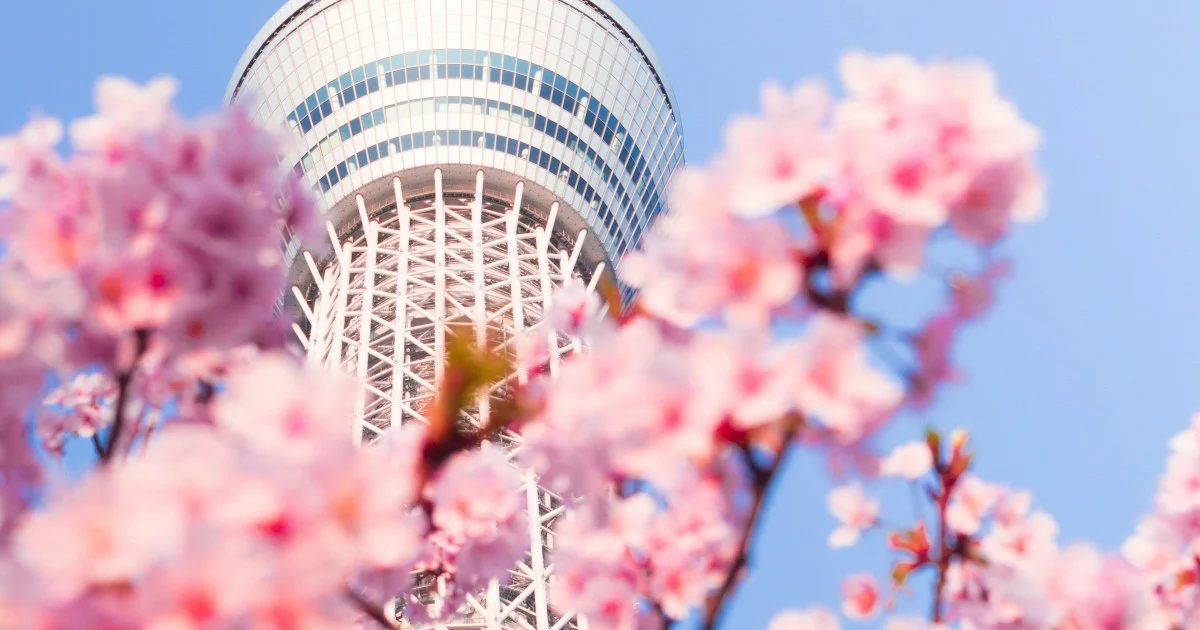
The best time to visit Tokyo is late March to April for cherry blossoms or October to November for autumn colour, when temperatures are mild and skies are at their clearest, unlike the humid tsuyu rainy season of June-July or the hot, typhoon-prone stretch from August through October.
Tokyo’s Four Seasons: Mild Bookends Around a Wet, Typhoon-Prone Summer
Unlike the simple wet-season, dry-season split of tropical destinations, Tokyo has genuine four seasons: a cool, dry winter, a mild spring, a hot and increasingly wet summer, and a crisp autumn. Rainfall, not just temperature, swings hard across the year, from a dry 51mm in December to over 200mm in the typhoon-influenced months of September and October.
Tokyo Weather by Month
The chart below shows average high and low temperatures and monthly rainfall for every month, based on Japan Meteorological Agency long-term normals.
Jan
(50°/36°F)
5 rainy days
Feb
(52°/37°F)
6 rainy days
Mar
(57°/43°F)
10 rainy days
Apr
(66°/50°F)
10 rainy days
May
(73°/59°F)
10 rainy days
Jun
(77°/66°F)
12 rainy days
Jul
(84°/73°F)
11 rainy days
Aug
(88°/75°F)
9 rainy days
Sep
(81°/70°F)
12 rainy days
Oct
(72°/61°F)
12 rainy days
Nov
(63°/50°F)
8 rainy days
Dec
(54°/41°F)
5 rainy days
| Month | Avg. High | Avg. Low | Rainfall | Rainy Days |
|---|---|---|---|---|
| Jan | 10°C / 50°F | 2°C / 36°F | 59 mm | 5 |
| Feb | 11°C / 52°F | 3°C / 37°F | 56 mm | 6 |
| Mar | 14°C / 57°F | 6°C / 43°F | 118 mm | 10 |
| Apr | 19°C / 66°F | 10°C / 50°F | 125 mm | 10 |
| May | 23°C / 73°F | 15°C / 59°F | 138 mm | 10 |
| Jun | 25°C / 77°F | 19°C / 66°F | 168 mm | 12 |
| Jul | 29°C / 84°F | 23°C / 73°F | 154 mm | 11 |
| Aug | 31°C / 88°F | 24°C / 75°F | 168 mm | 9 |
| Sep | 27°C / 81°F | 21°C / 70°F | 210 mm | 12 |
| Oct | 22°C / 72°F | 16°C / 61°F | 198 mm | 12 |
| Nov | 17°C / 63°F | 10°C / 50°F | 93 mm | 8 |
| Dec | 12°C / 54°F | 5°C / 41°F | 51 mm | 5 |
Spring (March-May): Cherry Blossoms and Comfortable Temperatures
Sakura season typically peaks in late March to early April, when parks like Ueno and Shinjuku Gyoen fill with blossom viewers, and daytime temperatures are mild enough for long walks without the summer humidity. Rain picks up steadily through spring, but it rarely disrupts a full day, and by May, warmer, more humid air starts building toward summer.
Tsuyu and Summer (June-August): Rainy Season Into Heat and Humidity
Tokyo’s rainy season, tsuyu, runs roughly early June to mid-July, bringing overcast skies and frequent rain rather than dramatic downpours. Once tsuyu breaks, summer turns hot and heavy with humidity, with August averaging 31C (88F) highs that feel considerably hotter given humidity levels regularly above 70%.
Tokyo’s Real Hazard: Record Heat and Typhoon Season Overlap
Tokyo’s biggest weather-related risk in recent years hasn’t been rain, it’s heat. The summer of 2025 was Japan’s hottest on record, and Tokyo alone recorded 252 heatstroke deaths between June and early September, breaking the previous year’s record of 251. Strikingly, 66 of the 101 suspected heatstroke deaths investigated in the city happened in rooms with air conditioning present but switched off, mostly among elderly residents.
Layered on top of the heat, typhoon season runs from roughly August through October, peaking in September, when tropical systems moving up from the southwest can disrupt trains, flights, and outdoor plans with little notice. If you’re visiting in late summer, it’s worth building slack into your itinerary and checking conditions daily rather than assuming a clear forecast will hold.
Autumn (October-November): Tokyo’s Best All-Round Season
Once typhoon season tapers off, autumn brings some of Tokyo’s most comfortable weather: cooler, drier air, clearer skies for views toward Mt Fuji, and koyo (autumn foliage) peaking in parks and along the Meiji Jingu Gaien avenue through mid-to-late November. Rainfall drops sharply from October’s 198mm to November’s 93mm, making this arguably the most reliable single month to visit.
Frequently Asked Questions
What is the best month to visit Tokyo?
Late March to early April for cherry blossoms, or November for autumn foliage and clear, mild weather, are generally considered the two best windows, both avoiding the peak humidity and typhoon risk of mid-to-late summer.
Does Tokyo have a rainy season?
Yes. Tsuyu, Tokyo’s rainy season, runs from roughly early June to mid-July, bringing overcast skies and frequent, if usually moderate, rainfall.
When is typhoon season in Tokyo?
Typhoon season runs from August through October, peaking in September, when tropical systems can disrupt trains and flights with little warning.
How hot does Tokyo get in summer?
August averages a high of 31C (88F), but high humidity makes it feel hotter, and heat has become a serious health risk: Tokyo recorded 252 heatstroke deaths in the record-breaking summer of 2025.
What is the coldest month in Tokyo?
January is coldest, averaging a high of 10C (50F) and a low of 2C (36F). Heavy snow is uncommon, though occasional light snowfall does occur.
Is Tokyo humid in summer?
Yes, noticeably. Humidity often exceeds 70% from June through August, which is a bigger factor in how uncomfortable the heat feels than the raw temperature alone.
In Conclusion
For the most reliable trip, aim for late March-April or November. If you visit in mid-to-late summer, the humidity and heat deserve as much respect as any typhoon, especially given how many recent heatstroke deaths in Tokyo happened indoors with unused air conditioning. Checking a live rain map or the live rain radar for Tokyo is worth doing daily during tsuyu and typhoon season alike.