The most reliable way to use rain radar for planning an outdoor event is to check the animated loop, not a single frame, starting the morning of the event and again roughly an hour before it begins, so you’re watching how a system is actually moving rather than guessing from one static snapshot.
Start With the Loop, Not the Snapshot
A single radar frame only tells you what’s happening right now, not where a shower is headed. Play the animated loop for the last hour or two and you’ll see the direction and speed precipitation is moving, which is usually enough to judge whether a cell currently 20 miles away will actually reach your event or slide past it entirely.
Check Again Closer to Start Time
Weather can change meaningfully in just a few hours, so a clear radar check the night before an event isn’t a guarantee for game day. Check again the morning of, and once more within an hour of the event starting, when the forecast is at its most accurate.
Know What Counts as a Real Threat
A pale green patch of light drizzle passing through is very different from an orange or red cell, and understanding the intensity scale, covered in our guide to radar reflectivity and dBZ, helps you avoid canceling an event over what turns out to be a five-minute sprinkle.
Watch for Lightning, Not Just Rain
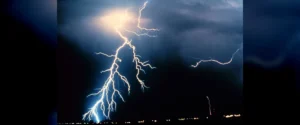
For outdoor events, lightning is usually the bigger safety concern than rain itself. Checking a live lightning map alongside your rain radar gives you a clearer signal for when it’s genuinely time to move everyone indoors, rather than relying on rainfall alone.
Build In a Backup Window
If your event has any flexibility, build a 30-60 minute buffer into your schedule. Many summer storms are short-lived, and a brief delay is often all it takes to let a passing cell clear the area completely.
Match the Zoom to the Timescale
The most common mistake is checking radar at one zoom level and drawing the wrong conclusion. Different questions need different views.
- Leaving now? Zoom to street level. Only what is within about 20 km matters.
- Event this afternoon? Zoom out to a few hundred kilometres upwind and look at what is approaching over the next several hours.
- All-day event? Radar alone is insufficient. Use it for the next 90 minutes and the 7-day forecast for the rest.
Build a Simple Decision Rule Before You Start
Deciding what counts as “too wet” while standing in drizzle with fifty people waiting is a poor moment for judgement. Decide in advance.
A workable rule for most outdoor events: green on radar is tolerable for anything that can continue in light rain; yellow means a pause; orange or red means shelter, particularly if the lightning map shows electrical activity in the same cell. Writing that down beforehand turns a debate into a checklist.
Lightning Changes the Calculation Entirely
Rain is uncomfortable; lightning is dangerous. For any outdoor gathering, lightning is the deciding factor rather than rainfall intensity.
Use the 30/30 rule: if the gap between flash and thunder is 30 seconds or less, the storm is within about 10 km and everyone should already be indoors. Wait 30 minutes after the final flash before resuming. A lightning map gives you warning before anything is audible, but once thunder can be heard you are already within range.
Plan for the Ground, Not Just the Sky
Rain that fell hours earlier still affects an event. Saturated ground means mud, unstable marquee pegs and unusable parking. Checking whether heavy rain crossed the site in the preceding day is often as useful as checking the forecast, and radar loops let you look back as well as forward.
Frequently Asked Questions
How do I use rain radar to plan an outdoor event?
Match the zoom to your timescale: street level for the next half hour, a few hundred kilometres upwind for the afternoon, and a forecast for anything beyond about 90 minutes. Decide in advance what intensity of rain will pause or stop the event.
How far ahead can radar tell me if rain will hit my event?
Reliably 30 to 90 minutes, by tracking precipitation that already exists. Beyond that use a forecast, because rain arriving later has not yet formed.
What radar colour means an event should stop?
A practical rule is that green is tolerable, yellow warrants a pause, and orange or red means shelter. Lightning overrides all of it: if there is electrical activity nearby, stop regardless of rainfall intensity.
How close does lightning need to be before we stop?
If the gap between flash and thunder is 30 seconds or less, the storm is within roughly 10 km and people should already be indoors. Wait 30 minutes after the last flash before resuming.
Should I check radar for rain that already fell?
Yes. Ground saturated by earlier rain causes mud, unstable marquee pegs and unusable parking. Radar loops let you look back over previous hours as well as forward.
In Conclusion
Radar can’t guarantee a dry event, but checking it properly, as a loop, more than once, and alongside lightning data, dramatically improves your odds of avoiding a surprise soaking.